

How Do You Clean a Wood Deck? A Step-by-Step Guide
Searching how to clean a wood deck? Here is the real professional process, step by step — and, just as important, the two steps most pressure washing companies skip that make all the difference between wood that comes out clean and wood that comes out damaged.
First, why a gray deck is a problem
That gray film, green algae and black spotting on a deck or fence is not just ugly — it is organic growth that holds moisture against the wood, breaks down the fibers, and makes the surface slick and unsafe. Left alone, it shortens the life of a structure you paid a lot to build. Cleaning it off is the cheapest way to protect that investment.
The one rule: soft wash, never high pressure
Here is the mistake that ruins more decks than dirt ever will: blasting wood with a high-pressure wand. High pressure tears up the soft grain, leaves permanent wand marks, and splinters the surface. Wood should be cleaned with low pressure plus the right chemistry — the cleaning solution does the work, not brute force.
Step 1: The right cleaner goes on
The cleaner matters. For wood, the professional choice is sodium percarbonate — mixed with water and a little soap into a wash solution. Worked into the boards, it lifts years of gray, algae and grime out of the grain without the harshness of bleach or the damage of pressure. We let it dwell so the chemistry can do the hard part.
Step 2: Wand it board by board
This is the slow, tedious part — and it is the difference between a pro job and a rushed one. Instead of a surface cleaner (which leaves circle marks and swirls on wood), you clean each board, stair, spindle and rail individually with a low-pressure wand. It takes far longer, but it is the only way to clean wood evenly, edge to edge, with no scarring.
Step 3: Rinse thoroughly
Once the wood is clean, rinse the whole surface to carry off the loosened grime and spent cleaner. A surface that is not fully rinsed holds residue that keeps working on the wood — which brings us to the step almost everyone forgets.
Step 4: Neutralize and brighten — the step nobody does
This is the most important step in the whole job, and most companies skip it entirely. After cleaning, you apply a wood brightener — oxalic acid. It does two critical things: it neutralizes the cleaning solution so it stops working on the wood, and it restores the wood’s natural richness and color. Skip it, and the leftover cleaner keeps breaking down the fibers long after the job is “done.” This is why properly finished wood looks like new wood, not just clean wood.
The honest truth about old stain
If your deck already has a stain or sealer on it, cleaning will not remove the stain — nobody can strip stain without sanding. What a good cleaning does is clean it back and brighten the bare wood so it is ready for you to re-stain. If your wood is already bare, the process revitalizes it. A straight company will tell you which situation you are in before starting.
What about composite (Trex) and vinyl?
Composite decking like Trex, and vinyl fencing, are simpler — they do not absorb growth the way wood does. They get the cleaning solution and a gentle soft wash, and they come out looking new, no brightener needed. Older or heavily scuffed vinyl sometimes needs a spot of hand-detailing with a magic eraser to lift stubborn marks the wash leaves behind.
Should you seal it? (Yes — and clean first)
Sealing is what makes a cleaning last. Once wood is clean, bright and dry, a good seal or stain protects it against sun, rain and Kansas City’s freeze-thaw seasons. The key is order: clean first, then seal. Sealing over algae and grime just locks the damage in. A freshly cleaned, sealed deck holds its finish far longer than a bare one.
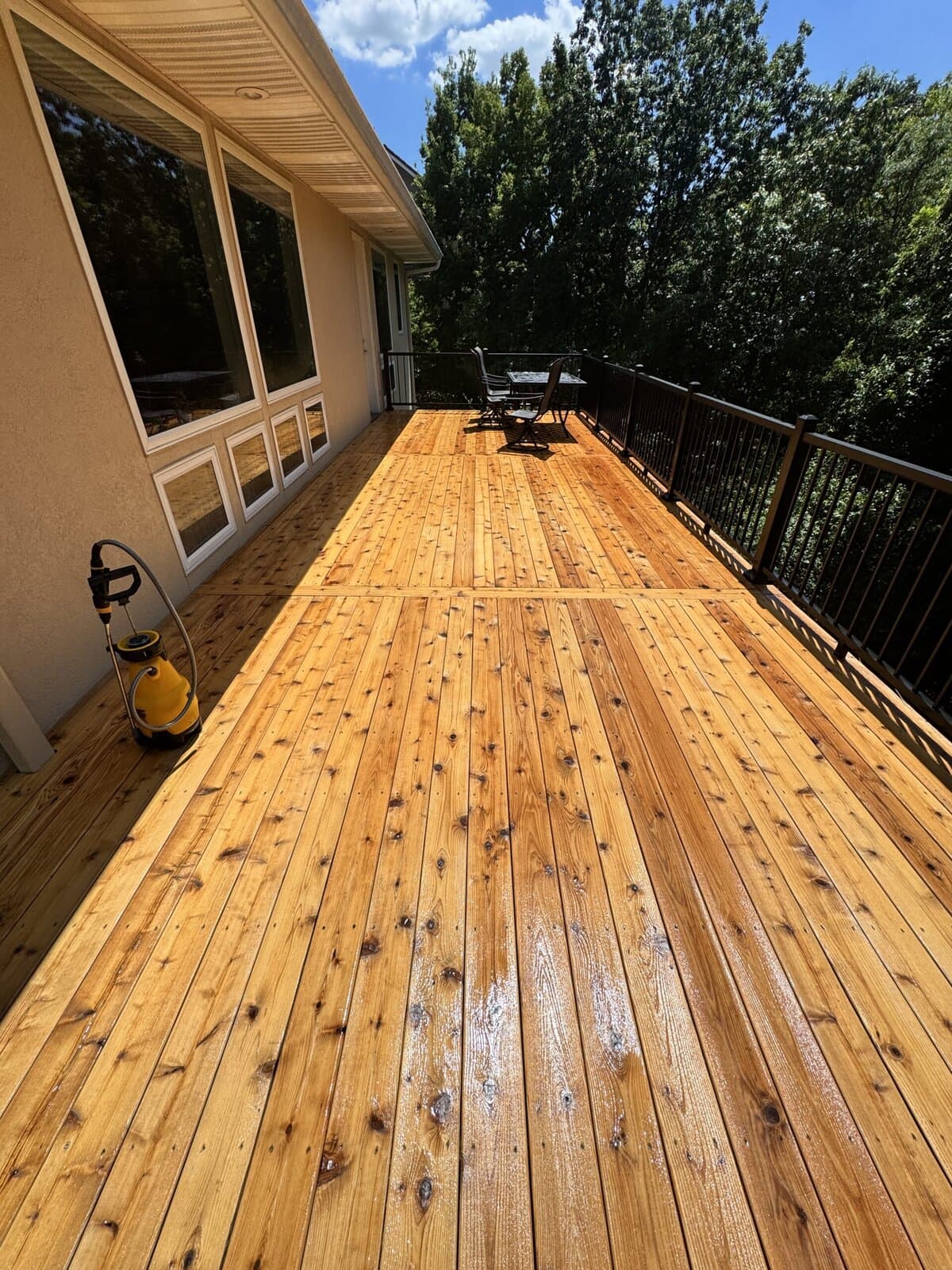
A KC Splash deck, cleaned and sealed
How often should you clean a deck or fence?
Less often than most companies want you to think. A good wood cleaning should hold up two to three years — and longer once it is sealed. We will not tell you to redo it every year; that is expensive and unnecessary. Heavy shade or tree cover can shorten it a little, and a sealed deck stretches it out. Clean it when it actually needs it, not on a schedule someone made up.
What does deck and fence cleaning cost?
Wood is a careful, hand-worked, four-step process, so it is priced accordingly: about $1.50 a square foot for wood decks and fences. Composite (Trex) and vinyl clean up faster, around $0.50 a square foot. Fences are quoted by their size. It is a flat, upfront price measured from a satellite draw-out — the number you are quoted is the number you pay.
DIY or hire it out?
The chemistry is the catch. Sodium percarbonate and oxalic acid, dwell times, and matching pressure to the wood take practice — and a wand held too close will scar a board in seconds. A small bare deck is a reasonable DIY if you are careful. For a large deck, a two-story fence, or anything stained, it is worth handing to a crew that does the full four steps every day and carries the brightener most people never use.
Download our full deck & fence process (PDF) →
Deck & Fence Cleaning FAQs
How much does deck or fence cleaning cost in Kansas City?
Wood is priced at about $1.50 a square foot because it is a careful, hand-wanded, four-step process finished with a brightener. Composite (Trex) and vinyl clean up faster at around $0.50 a square foot. Fences are quoted by size. It is a flat, upfront price.
Will pressure washing damage my wood deck?
High pressure absolutely can — it tears the soft grain, leaves wand marks and splinters wood. That is why we soft-wash: low pressure plus a cleaning solution, hand-wanded board by board so there are no swirl marks and no scarring.
Can you remove old stain or paint from my deck?
No — stain cannot be removed by cleaning; that takes sanding. What we can do is clean the wood back and brighten it so it is ready for you to re-stain. If your wood is already bare, we revitalize it.
Do you seal or stain decks after cleaning?
Yes, and it is the best time to do it — on freshly cleaned, dry wood. We clean first, then seal, because sealing over algae and grime just locks the damage in. A sealed deck holds its finish far longer.
How often should I clean my deck or fence?
Every two to three years for most wood, and longer once it is sealed. We will not push you to clean every year — that is expensive and unnecessary. Heavy shade can shorten it; we will tell you honestly when yours is due.
Do you clean composite (Trex) and vinyl too?
Yes. Composite and vinyl are simpler than wood — they get the cleaning solution and a gentle soft wash and come out like new. Older vinyl sometimes needs a scuff mark hand-rubbed with a magic eraser to finish it off.